Interview with Deborah Tomkins – Aerth, a Genre-Based Novella-in-Flash

This month, novella-in-flash.com features an interview with the writer Deborah Tomkins. Deborah’s novella-in-flash Aerth was published by Weatherglass Books in January this year. It has already sold out of the first print run and has been reprinted. 

Michael: Welcome to this blog series, Deborah. It’s been so exciting to see how your novella has been well received in early reviews, including in broadsheet newspapers such as The Guardian and The Telegraph, as well as by book reviewers on Youtube and Instagram. Especially as it’s one of those rare things – a genre-based novella-in-flash (with speculative, and science-fiction, and climate fiction elements). I am very much hoping your success inspires more flash fiction writers to try writing genre-based novellas. 

I think the tale of this book’s journey to publication is worth re-telling to readers, as it strikes me – from the outside – as an inspiring story of never-give-up determination. 
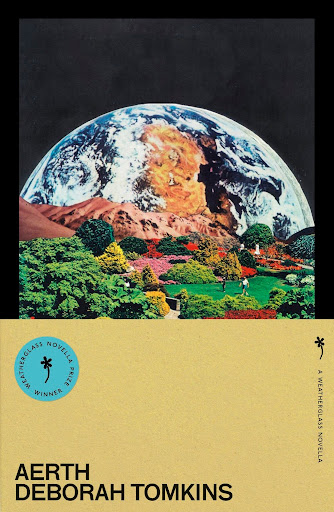
You’ve talked about how a version of this book was first longlisted in 2019 in the Bath Flash Fiction Award Novella-in-Flash competition. And you kept working on it for several years before submitting it to the Weatherglass competition. Could you talk a bit about that journey? Were there any particularly difficult moments along the way? And also what lessons you might be taking from the process, for your future writing projects?

Deborah: Thank you so much, Michael, and thank you for inviting me onto the blog series too. 

It was quite a journey. It ended up being about 5 years, from first seeing if I could write a novella-in-flash (and flash fiction itself was still very new to me back in 2018, when I began this story) to finally sending it in August 2023 to Weatherglass Books for their Inaugural Novella Competition, which was judged by Ali Smith. That last year or so I didn’t do much to it, actually; it just sat in my computer and I occasionally sent it off to a publisher or a competition. 

There were lots of difficult moments! Novellas are quite difficult, and a novella in flash is not only difficult but also very slippery, in the sense that these tiny ideas that you have may take the story in any number of directions – and they did. It’s not easy choosing what to keep and what to throw away (although I think no writing is ever wasted – you’re always learning what works and what doesn’t), or working out what direction is the most fruitful one for the story, or what will be most surprising to a reader. And as a writer I found I was too close to see that clearly, so the long process was very helpful – leaving it for several months and going back to it with fresh eyes.

I kept thinking about it, though, and even when I thought it was “finished”, I would go back to it and play around with it some more, particularly when it hadn’t been accepted somewhere. The story – and Magnus, my protagonist – wouldn’t leave me. I kept feeling that it was a deeper and stranger story than I had been allowing it to be.

I’ve also realised that I’m not a fast writer. I need to spend a lot of time with a story, to see what it might be saying or where it may want to go. 

Michael: It’s really interesting that you noticed an urge to make the story deeper and stranger. My hunch is that for so many novella-in-flash manuscripts “deeper and stranger” would be a very productive instinct to follow! And personally rewarding and fun for the writer during the process, too. 

I want to ask you next about the genre-based elements of this novella-in-flash. If we think about Aerth’s qualities as a piece of “climate fiction” first of all: you’ve been involved in writing about the environment for some time – for example via Bristol Climate Writers, and also in other contexts. I’m wondering what questions (about climate, or environment, or ecology) you particularly wanted to explore as you wrote it? And I’m also interested, with this piece of climate fiction, in how you saw the roles of the novella’s three different story-worlds (not only the twin planets of Aerth and Urth, but also Mars, which features too), which each have such different qualities as settings?

Deborah: In many ways this book came together accidentally, in that I didn’t have a plan at the start. It was very much not plotted! I wrote small pieces – or fragments of pieces – as they occurred to me, and as I was thinking about Magnus and his life. The very first piece was one I wrote in a workshop at the Flash Fiction Festival in 2018, and comes about a third of the way through the book. 

But, like most of us, I have my preoccupations – in my case, climate, ecology, and ethics – and these began to show more clearly as I explored Magnus and his world. After a while it became so obvious that I was writing about climate that I simply went with it. Magnus’s own planet Aerth is heading towards an ice age, and I thought it would be interesting to explore how a modern technologically advanced society coped with the challenges of this. Our own planet Earth should right now be cooling down, coming to the end of the current interglacial period, rather than heating up. And, counter-intuitively, in the future because of the rapid heating of our planet, the vast ocean currents in the Atlantic that keep Europe temperate may just switch off, in which case we will become as cold as northern Canada. This has been known for a long time, but is only now reaching the media. The reader can decide which scenario is playing out here.

Aerth is also pristine. It’s unpolluted, deeply forested, and there is an abundance of wildlife – as there was on our own planet only a couple of centuries ago – due to the small population and their resolve to “Do No Harm”. What would it be like to live on a planet teeming with life? 

Urth – Earth’s “dark twin” on the other side of the Sun – is entirely opposite. On this planet anything goes – ethics are optional, the planet is heating very fast, it’s polluted and aggressive, and there is little wildlife left. Magnus becomes trapped there and has to navigate a society he is ill-equipped to deal with, as his home planet is deeply ethical, kind and respectful. Here I was exploring a kind of future that we want to avoid.

Mars was a kind of airlock! As a child Magnus always wanted to travel there, and he manages this – but the lure of exploring Urth pulls him on. For me, Mars was a very brief interlude in which I considered the difficulty of “terraforming” a dead planet – although in this case Mars is not entirely dead as it has a thin atmosphere. There has been a lot of talk about colonising other planets in recent years, in part to rescue humanity from destruction, but I honestly think it would be far better to look after the one we have.

All the flashes were written out of order, and I spent a long time working out how to order them. My editor and I sometimes had different ideas!

Michael: Fascinating! I really like how you describe this novella-in-flash coming together “accidentally”, as you accumulated the fragments. I think readers will draw inspiration from the fact that you were patient in exploring the main character (and his story-world) from different angles until the novella started to take clearer shape. Could we also talk about the book as a piece of “speculative fiction” or “science-fiction”? I noticed that Luke Kennard in The Telegraph described the book as “more allegory than hard sci-fi” yet concluded: “an intelligent sci-fi thriller and a thought-provoking parable”. Were there scientific aspects that you had to research, in order to deliver a convincing fiction? Were you consciously thinking of it as allegory or parable? Or did you see it as a piece of “speculative” writing? Which non-realist elements did you most enjoy experimenting with and dreaming up?

Deborah: I would very much agree that it’s not hard science fiction! However publishers have to give readers an idea about a book’s genre, and “science fiction” is close enough. I used to describe it as speculative. But really it’s neither of those things, nor is it fantasy. I recently came across the term slipstream, and I think it may be that, completely unwittingly! Aerth doesn’t sit squarely in any genre category, really, and I think flash fiction can be fairly literary, in its use of language and form, the not-always-obvious ideas, and so on.

As I’ve been an environmental campaigner for many years, I know a fair amount about climate science and environmental issues (although I’m not a scientist). So it wasn’t too difficult for me to subtly weave that kind of information into the story, as I think about it a lot in my day-to-day life. 
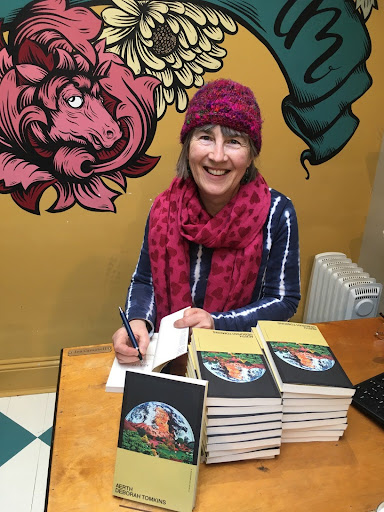
I did have a lot of fun messing with physics! The whole conceit of two planets on opposite sides of the Sun is an ancient idea, first invented by the Greeks.  I love the idea – but sadly it’s not true. We would have spotted another such planet long ago, because of gravitational pull and light bending around objects in space. I believe one of the space probes had a look-see a few years ago – and Urth is definitely not there (neither is Aerth). My protagonist Magnus also experiences strange phenomena which are pretty unlikely… shimmering doors and doppelgängers, for example. I really enjoyed playing with these ideas, which veer into fantasy, I suppose.

I didn’t consciously think of this story as allegory or parable, although I’m delighted with Luke Kennard’s assessment. I think many writers write for themselves first of all, and I was exploring different ways of living. What would it be like, to live in a society where the most important law is to “First, do no harm”? And where did that law come from? And then to explore the opposite, where the imperative not to harm never crosses people’s minds. I was able to play with these ideas over several years as the book very slowly came together. 

Michael: Great to hear this about your process, Deborah. I think it’s inspiring that your book was about “exploring different ways of living”. There’s lots to take from that. And good for more people to know about “slipstream”. Thank you for participating in this blogpost series!

Deborah & Michael: To finish, we’d like to leave you with a writing prompt that we’ve created together:

Invitation: Write a flash fiction from the point of view of another species (or non-human perspective), observing one of your novella’s main characters. 

  • What is the human main character doing? (Think about what’s physically observable from the non-human perspective).
  • What does the other perspective understand (or not) about the human’s behaviour?
  • How do they feel about what’s happening? 
  • Are they able to react, or interact with the human main character? If so, how? 
  • Does the main character notice being observed, or is it happening without their knowledge? 
  • Finally, what insight, question, or truth about humanity might the story move towards?

Food for thought #1 – by Craig Raine

Food for thought #2 – by Helen Moore

Food for thought #3 – by Caleb Parkin

Deborah Tomkins Biography – Deborah writes long and short fiction, often about human relationships with the natural world. Her short fiction has been published online and in print. Her novella-in-flash Aerth (Weatherglass Books, January 2025) won the Inaugural Weatherglass Novella Prize, judged by Ali Smith. Her forthcoming novel The Wilder Path  (Aurora Metro Books, May 2025) won the Virginia Prize for Fiction in 2024. In 2017 she founded the local writers’ network Bristol Climate Writers. 

Website: deborahtomkinswriter.com
Bluesky: @tomkinsdeb.bsky.social

Other flash fiction by Deborah Tomkins: www.deborahtomkinswriter.com/stories/

==================================

Don’t want to miss this blogpost series? Sign up to receive each new post direct to your email in-box (and get access to exclusive offers on mentoring) here:

Join 264 other subscribers

Are you working on a novella-in-flash? Or wanting to write one? Find out more about Michael Loveday’s Novella-in-Flash mentoring: here.

Round-up of Novella-in-Flash News from 2024…

Here’s a round-up of 2024’s NIF-related activities and news. In the list below, look out for details of recent book publications, online communities you can join, workshops/panel discussions, and announcements about awards successes!

Photo by Roman Kraft on Unsplash

(1) The annual Flash Fiction Festival took place once again in July, in Bristol, in the SouthWest of the UK. There’s always plenty of focus there on the novella-in-flash, with lots of recently published novellas for sale at the festival bookshop, and plenty of published NIF authors you can talk to among the festival attendees. Most years there are workshops, panel discussions and/or book launches related to NIFs. This year, for example, novella-in-flash author and teacher John Brantingham hosted a panel discussion about the form, and there was a dedicated workshop about harnessing everyday life when writing a novella-in-flash. Sarah Freligh and Karen Jones also launched their novellas at the festival. (See items (4) and (5) below) In 2025, the dates for the festival will be 18th-20th July – keep an eye out for news via this webpage: https://www.flashfictionfestival.com/

(2) The “NIFTY Book Club”, a monthly online book group for readers of novellas-in-flash, is continuing to flourish under Laura Besley’s stewardship. If you want to join during 2025, you can find out more details about this event series here: https://www.laurabesley.com/nifty-book-club

(3) Debbi Voisey’s Writers Reading series recently hosted a Novella-in-Flash special, with readers including the novella-in-flash aficionados Jan Kaneen, Diane Simmons, Finnian Burnett, Aline Soules, Lisa Jervis Biggar, Caroline Price, Bronwen Griff, Fiona Jane Mackintosh, Adele Evershed and Hilary Ayshford. Debbi hopes to run another NIF-themed evening again in future – keep an eye out for announcements.

(4) Awards success! In the Spring, Sarah Freligh won the Bath Flash Fiction Award Novella-in-Flash competition with Hereafter. The joint runners-up were Sudha Balagopal with Nose Ornaments, and Jo Withers with Marilyn’s Ghost. You can read comments from this year’s judge John Brantingham here. Later in the year, Jan Kaneen’s A Learning Curve, which had won the BFFA competition in 2023, was then shortlisted for the 2024 Rubery Book Award for Short Fiction. The judges said: “a stunning example of a novella-in-flash that demonstrates the potential force and flexibility of this increasingly popular form.” Finally, Deborah Tomkins’s novella-in-flash Aerth won the inaugural Weatherglass Books Novella Award, judged by Ali Smith, who described the book as “a thrilling journey in a story the size of a planet”.

(5) A number of other new novella-in-flash publications made their way into the world in 2024. Here’s a list of further NIF releases, based on social media announcements I’m aware of:

Wes Blake’s Pineville Trace (Etchings Press)
Finnian Burnett’s The Price of Cookies (Off Topic Publishing)
Philip Charter’s Before. During. After. (Pelekinesis Press)
Peter Cherches’s Everything Happens to Me (Pelekinesis Press) (or from here for UK readers)
Adele Evershed’s Schooled (Alien Buddha Press)
Jeff Harvey’s Life Would Be Perfect If (Bottlecap Press)
Karen Jones’s Burn It All Down: An Ekphrastic Novella-in-Flash (Arroyo Seco Press)
Kristin Boryca Kozlowski’s Unraveling the Alien Missions (Four Born Press)
D.X. Lewis’s A Life in Pieces (Alien Buddha Press)
Diane Simmons’s A Tricky Dance (Alien Buddha Press)
Diane Simmons’s William Prichard & Co (Arroyo Seco Press)

[There may have been other NIF publications during 2024 that I’ve neglected here! Please comment below if you were published in 2024 and would like to be included.]

(6) A number of writers and teachers continue to support individual authors who want to explore the novella-in-flash form. You might access help from any of the following who often work with writers 1-to-1: Matt Kendrick, Meg Pokrass, Nancy Stohlman, Debbi Voisey, Michelle Elvy and Michael Loveday.

(7) 2024 also saw the announcement of a VERY exciting development for early next year: Retreat West are running the first ever dedicated Novella-in-Flash Festival (online, on the 9th February)! The programme of four workshops for the full day looks wonderful – a very rich set of craft topics for exploration.

And finally…

(8) This year the number of participants in the Novella-in-Flash Facebook community went past the milestone of 500! It’s a thriving forum for anyone wanting to discover more about the novella-in-flash, and it’s open to ALL. You are welcome to join here, where you’ll find a group of enthusiastic readers and writers all keen to support this unique literary form and share news and information. The group is a great place for finding out about new publishing opportunities for NIFs that you’re keen to get out into the world, new reading events, or new workshop offerings and mentoring from novella-in-flash teachers. So please do join us!

I think that’s it for now! Lots going on, and lots more novella-in-flash-related blogposts to look forward to in 2025…

This news round up is part of a regular blogpost series containing writing prompts, novella-in-flash book reviews, interviews, workshop/mentoring offers, and other announcements related to all things novella-in-flash.

==================================

Don’t want to miss this blogpost series? Sign up to receive each new post direct to your email in-box (and get access to exclusive offers on mentoring) here:

Join 264 other subscribers

Are you working on a novella-in-flash? Or wanting to write one? Find out more about Michael Loveday’s Novella-in-Flash mentoring: here.

The Historical Novella-in-Flash – a rapidly growing genre…

Last weekend at the annual Flash Fiction Festival in Bristol, England, one of the workshops (‘A Blast from the Past!’) was an introduction to the historical novella-in-flash, a category of novella-in-flash that seems to be increasingly popular.

In fact, among all the literary genres that could possibly be adopted within the novella-in-short-short-stories, it seems to be historical fiction that is emerging as the most prevalent so far – more so than science fiction, fantasy, crime, magical realism, and so on (and leaving to one side for now the standard mode of contemporary realism in ‘literary fiction’, which has been the dominant mode).

At the Festival workshop, one writer wondered if there might be something specific to the way that the novella-in-flash ranges through time (by creating, between its short chapters, gaps and silences in the novel’s otherwise usually continuous plot), that has meant that the two kinds of writing – novella-in-flash and historical fiction – have fused together so keenly. It’s very possible!

We also discussed at the workshop some of the exciting opportunities and writerly challenges presented by this unique fusion of styles, and began to explore what happens when a novella composed of short-short stories combines with some of the conventions of historical fiction.

Here’s a provisional list of historical novellas-in-flash that have been published to date. It would be wonderful to curate a thorough online record – there are inevitably going to be a few gaps in this initial list below, so please comment below if there’s a historical novella-in-flash you know that’s missing. Especially if – forgive me! – it’s one that you’ve written! At the end of the list (actually two lists!) is a summary of some of the different approaches adopted by the writers of these books, based on examples published to date. If you want to write a historical novella-in-flash, it might be worth considering which of these different approaches appeals to you, so you’re aware of all your options before you get fully underway. And the blogpost ends with some writing/thinking prompts, some of which we shared at the workshop, in the hope that you have one or two epiphanies about potential subject matter for one of your own…

Photo by Chris Lawton on Unsplash

Novellas-in-Flash that act as “Historical Fiction”

Alan Lightman – Einstein’s Dreams (1992; Corsair, 2012)
Bob Thurber – Paperboy (Shanti Arts Publishing, 2011)
David Rhymes – The Last Days of the Union (Ad Hoc Fiction, 2022)
David Rhymes – ‘Monsieur’ (in Monsieur, an anthology of three “novelettes-in-flash”, Retreat West, 2022)
David Swann – The Twisted Wheel (Ad Hoc Fiction, 2023)
Debra A. Daniel – A Family of Great Falls (Ad Hoc Fiction, 2021)
Diane Simmons – An Inheritance (V. Press, 2020)
Eleanor Walsh – Stormbred (Ad Hoc Fiction, 2020)
Gaynor Jones – Among These Animals (Ellipsis Zine, 2021)
Graham Swift – Last Orders (Picador, 1996)
Jack Robinson – Days and Nights in W12 (CB Editions, 2011)
Joanna Campbell – ‘A Safer Way to Fall’ (in How to Make a Window Snake, an anthology of three novellas-in-flash, Ad Hoc Fiction, 2017)
Joanna Campbell – Sybilla (National Flash Fiction Day, 2022)
Johanna Robinson – Homing (Ad Hoc Fiction, 2019)
Jupiter Jones – Lovelace Flats (Reflex Press, 2022)
Jupiter Jones – The Life and Death of Mrs Parker (Ad Hoc Fiction, 2021)
Kathy Hoyle – Chasing the Dragon (Alien Buddha Press, 2023)
Kelcey Parker – Liliane’s Balcony (Rose Metal Press, 2013)
Lex Williford – Superman on the Roof (Rose Metal Press, 2016)
Margaret Patton Chapman – ‘Bell and Bargain’ (in My Very End of the Universe, an anthology of five novellas-in-flash, Rose Metal Press, 2015)
Marguerite Duras – The Lover (1984; Harper Perennial Modern Classics, 2010)
Maria Romasco Moore – Ghostographs: An Album (Rose Metal Press, 2018)
Mary-Jane Holmes – Don’t Tell the Bees (Ad Hoc Fiction, 2020)
Michael Ondaatje – Coming Through Slaughter (1976; Bloomsbury Publishing, 2004)
Michael Ondaatje – The Collected Works of Billy the Kid: Left-Handed Poems (1970; Picador, 1989)
Michelle Christophorou – Kipris (Ad Hoc Fiction, 2021)
Nod Ghosh – The Crazed Wind (Truth Serum Press, 2018)
Nod Ghosh – The Two-Tailed Snake (Fairlight Books, 2023)
Nod Ghosh – Throw a Seven (Reflex Press, 2023)
Roberta Allen – The Daughter (Autonomedia, 1992)
Sandra Arnold – The Bones of the Story (Impspired, 2023)
Sheree Shatsky – Summer 1969 (Ad Hoc Fiction, 2023)
Sophie Van Llewynn – Bottled Goods (Fairlight Books, 2018)
Sudha Balagopal – Things I Can’t Tell Amma (Ad Hoc Fiction, 2021)
Sylvia Petter – Winds of Change (Flo Do Books, 2021)

“Coming of Age”/Family Saga-style narratives that have their initial roots in the past before reaching the contemporary world

Adam Lock – Dinosaur (Ellipsis Zine, 2019)
Calum Kerr – Saga: a flash-fiction novella (CreateSpace Independent Publishing Platform, 2014)
Chloe Banks – At the Bottom of the Stairs (Reflex Press, 2022)
Debbi Voisey – Only About Love (Fairlight Books, 2021)
Michelle Elvy – the everrumble (Ad Hoc Fiction, 2019)
Ruth Skrine – Echoes in a Hollow Space (Ad Hoc Fiction, 2021)

Different Strategies adopted by Historical Novellas-in-Flash:

  • Fictional characters influenced by and participating in historical events, i.e. supposedly active in the newsworthy current affairs of the time e.g. Homing (characters participating in World War II).
  • Using historical context as “background texture”, a vivid setting for the personal (fictional) story in the foreground, rather than a plot that’s entangled with the current affairs of the time – e.g. An Inheritance (a family’s history across the 20th century).
  • A mid-point between both these approaches above – characters directly influenced by the political structures and events of the time, without actively participating in the course of those national / international events, and with a primary focus on a story of personal challenges – e.g. Sybilla (a personal story unfolding in the shadow of the Berlin Wall when it divided East and West Germany).
  • Another option: using real people (well-known or neglected) from history as your protagonists experiencing known events from real-life, with and a high degree of factual accuracy in the novella’s plot – e.g. The Last Days of the Union
  • A key choice: will you narrate the story as if it’s unfolding and happening in the past in real-time (e.g. Collected Works of Billy the Kid) or will you access the past via nostalgic or fraught reminiscence from the present (e.g. The Lover)?
  • Or move back and forth alternating between two stories: one in the present-day and one in the past – e.g. Liliane’s Balcony?
  • Or jumping deliberately “haphazardly” and fluidly across various years/eras (Superman on the Roof, the everrumble)
  • Consider also the option of using “recent history” (within last 30-40 years) – e.g. Stormbred, Lovelace Flats, Things I Can’t Tell Amma

Invitation: Which of the above approaches would you like to adopt for a historical novella-in-flash?

Possible Ways Forward:

(1) Research Interests
Consider any research interests or personal hobbies that you have…


• Which non-fiction topics do you like reading about most or talking about most (think for example of magazine/online articles/news as well as books)?
• Which aspects of culture or society are you most interested in?
Could either of these be (re-)located within an interesting historical setting?

• Is there a famous person from the past who has often fascinated you? Or a historical era or community you’ve often been fascinated by?

(2) Family history
• Is there an aspect of your own family’s roots that could be mined for an extended writing project – specifically something in your family’s background that links to a broader aspect of social history or a specific newsworthy event (local, national, or international)?

Identify a few ideas you’d be interested to research

This email is part of a regular blogpost series containing writing prompts, novella-in-flash book reviews, workshop/mentoring offers, and other announcements related to all things novella-in-flash.

==================================

Don’t want to miss this blogpost series? Sign up to receive each new post direct to your email in-box (and get access to exclusive offers on mentoring) here:

Join 264 other subscribers

Are you working on a novella-in-flash? Or wanting to write one? Find out more about Michael Loveday’s Novella-in-Flash mentoring: here.

Latest News in the Novella-in-Flash World…

Here’s a handy round up of recent/imminent happenings related to all things Novella-in-Flash. In the list below, look out for new book discussion events, workshops, and publications, for July 2023 and onwards:

Photo by Roman Kraft on Unsplash

(1) The “NIFTY Book Club” discussing novellas-in-flash, which was launched a few months back by Matt Kendrick, seems to be thriving nicely. It’s about to continue with a new 6-month series, starting in July, and for this series Laura Besley will be the host. The next meeting (two dates to choose from: 16th or 17th July) will be a discussion of Evan S. Connell’s wonderful book Mrs Bridge, one of the very first novellas-in-flash, and through its 117 brief episodes, one of the very best examples of the form at its most novel-like. It was published in 1959, over 50 years before the novella-in-flash label itself was established. You can find out more details about the NIFTY Book Club series here: https://www.mattkendrick.co.uk/nifty-book-club

(2) Around the same time, the annual Flash Fiction Festival (14th-16th July) will be happening in Bristol, in the SouthWest of the UK, and there will be plenty of focus there on the novella-in-flash, with lots of recently published novellas for sale at the festival bookshop, plenty of published NIF authors you can talk to among the festival attendees, and a workshop on Sunday 16th (11.00 am – 12.30 pm) on generating ideas for a Historical Novella-in-Flash: ‘A Blast from the Past!’ Find out more here: https://www.flashfictionfestival.com/

(3) On 29th July OR 13th August (either date) you can attend an online novella-in-flash workshop with author and teacher Alison Woodhouse through The Crow Collective: ‘Mapping the Stars: Charting Novellas-in-Flash’. Alison is the author of the brilliant novella-in-flash The House on the Corner (Ad Hoc Fiction, 2020). More details about this workshop here: https://crowcollectiveworkshops.com/2021/11/22/novella/

(4) Michael Loveday’s NIF craft guide Unlocking the Novella-in-Flash: from Blank Page to Finished Manuscript (Ad Hoc Fiction, 2022) has just been announced as one of three Finalists in the Writing/Publishing category of the International Book Awards 2023. This follows on from its recognition in the Reader Views Literary Awards 2023 (Silver Medal Award for Writing/Publishing), the National Indie Excellence Awards 2023 (Finalist) and the Next Generation Book Awards 2023 (Finalist). If you’re interested in writing a novella-in-flash, you can find out more about this craft guide here: https://www.adhocfiction.com/2022/04/unlocking-the-novella-in-flash-michael-loveday/

(5) A number of new Novella-in-Flash publications have made their way into the world in recent weeks, or been announced as imminently arriving. Here are just some of the recent releases and forthcoming books/chapbooks, based on announcements on social media: ‘Unpasteurized’ by Lisa Jervis Biggar (Alien Buddha Press, 2023), ‘Summer 1969’ by Sheree Shatsky (Ad Hoc Fiction, 2023), ‘Throw a Seven’ by Nod Gosh (Reflex Press, 2023), ‘The Bones of the Story’, by Sandra Arnold (Impspired, 2023), ‘Chasing the Dragon’ by Kathy Hoyle (Alien Buddha Press, 2023), ‘Essence’ by Christopher M Drew, and ‘The Twisted Wheel’ by David Swann (both Ad Hoc Fiction, 2023). And there will have been other recent novella-in-flash publications that I’ve accidentally neglected in making this list. These are just the ones most recently mentioned in the Novella-in-Flash Facebook group, which you can find out more about in (7) below…

(6) Awards success! Three novellas-in-flash were recently shortlisted for Best Novella in the 2023 Saboteur Awards in the UK: ‘The Clothes Make the Man’ by Finnian Burnett, ‘All Their Favourite Stories’ by Slawka G. Scarso, and ‘Gull Shit Alley and Other Roads to Hell’ by Jupiter Jones (all published by Ad Hoc Fiction, which was also shortlisted for Most Innovative Publisher in the same awards).

And finally…

(7) The novella-in-flash Facebook community continues to thrive, and has recently passed the 400-mark for its number of participants. It’s open to anyone interested to discover more about the novella-in-flash, and you are welcome to join via the following link, where you’ll find a group of enthusiastic readers and writers all keen to support this unique literary form and share news and information. The group is a great place for finding out about new publishing opportunities for NIFs that you’re keen to get out into the world, new reading events, or new workshop offerings and mentoring from novella-in-flash teachers. So do join us!
https://www.facebook.com/groups/642008596648020

I think that’s it for now! Lots going on, and lots more novella-in-flash news to look forward to in the months ahead…

This news round up is part of a regular blogpost series containing writing prompts, novella-in-flash book reviews, workshop/mentoring offers, and other announcements related to all things novella-in-flash.

==================================

Don’t want to miss this blogpost series? Sign up to receive each new post direct to your email in-box (and get access to exclusive offers on mentoring) here:

Join 264 other subscribers

Are you working on a novella-in-flash? Or wanting to write one? Find out more about Michael Loveday’s Novella-in-Flash mentoring: here.

Evan S. Connell, Mrs Bridge (1959)